Maine State Park Campground Rules: Occupancy, Vehicles and Waste
Maine State Park campground rules affect more than the person who made the reservation. Your whole party needs to understand arrival registration, how occupancy is counted, which vehicles may be at the site, and how to handle waste. Here’s how to plan around the rules that are stated clearly—and where to confirm details that can vary by campground.
What the campground rules cover
A smooth camping trip starts with knowing which decisions are governed by statewide campground rules and which depend on the specific park, campsite, or current conditions. The rules covered here address registration on arrival, campsite occupancy, vehicles, and the cumulative limit on camping at a park during a defined summer period. Waste handling also deserves attention, but the specific requirements should be confirmed with the official information for the campground you plan to use.
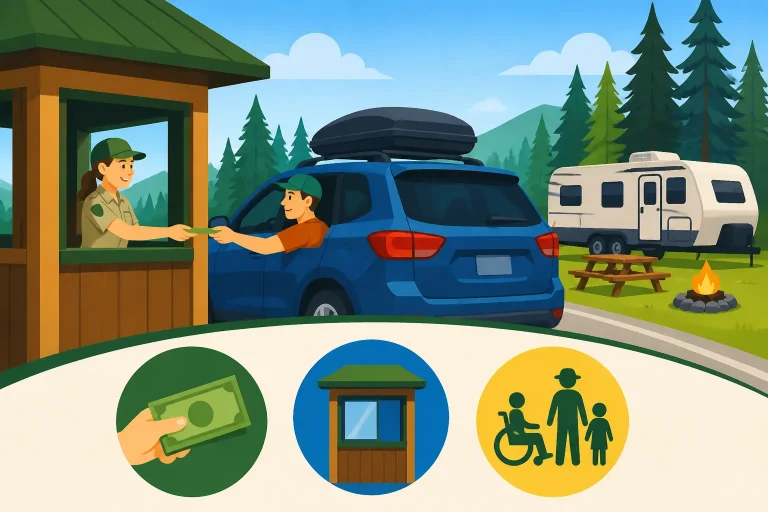
According to the Maine Department of Agriculture, Conservation and Forestry, Bureau of Parks and Lands, all campers must register in person when arriving at a State Park campground. That makes arrival a practical step for everyone in the party, not just an administrative detail for the person who arranged the trip. Plan to follow the campground’s arrival instructions and allow time to complete registration before settling in.
The same bureau states that a campsite has a limit on the number of people and motor vehicles it can accommodate. These limits can affect the choice of site, how a family or group organizes its trip, and whether friends can visit or arrive in separate vehicles. A group that fits comfortably in a larger picnic area may not fit the rules for one overnight campsite.
The limit on nights is also worth checking before planning multiple stays. It applies cumulatively at any one park during a particular summer period, so changing campsites within that park should not be treated as a way to reset the total. If your itinerary includes separate parks, compare the rules for each campground rather than assuming every stay works the same way.
Some details require a separate check. Confirm the full family allowance, procedures for additional vehicles, waste-disposal arrangements and any conditions in current campground notices with the Maine Department of Agriculture, Conservation and Forestry, Bureau of Parks and Lands. Do not guess at those details. Read the official rules and the information for the particular campground, then ask park staff if an important part of your plan is still unclear.
For a broader overview of campground choices and trip planning, see Camping in Maine State Parks: Campground Choices, Openings and Rules. If you are still comparing locations, What Sites Maine State Park Campgrounds Offer and How to Choose One can help you focus on the campsite features that matter to your group.
Registering when you arrive
The in-person registration requirement has a direct planning consequence: do not assume that having a reservation or arriving at the park entrance means you can go straight to your site. Follow the campground’s posted instructions for checking in, and make sure the people who are traveling with you know where the arrival process takes place.
Before leaving home, gather the information you expect to need for arrival, such as your reservation details and the site information provided to you. Keep it accessible rather than packed beneath other gear. If the trip includes more than one vehicle, make sure the people in each vehicle know the site assignment and the arrival plan. That can prevent a group from splitting up without knowing where to go or whom to check in with.
If someone in the party expects to arrive later, do not assume that person can skip the campground’s registration process. The rule applies to all campers, so the late arrival should follow the official instructions too. Check how the campground handles staggered arrivals before the trip, especially if the first vehicle will reach the campground well before the others.
The reservation details and the rules are related, but they are not interchangeable. A booking identifies the campsite and dates arranged through the reservation process; it does not remove the obligation to register on arrival or answer questions about who is staying at the site. Review both the reservation information and the campground instructions.
Use What to Bring to Check In at a Maine State Park Campground as a planning prompt for arrival documents and details. Your Maine Campsite Reservation Permit: What It Is and Why It Matters can also help clarify what reservation paperwork is for, while the campground’s official instructions remain the place to confirm its current check-in procedure.
A simple arrival plan helps avoid confusion:
- Keep the reservation information where the arriving driver can find it.
- Tell each vehicle’s occupants the campground and site information.
- Agree on a meeting point if the party is arriving in separate vehicles.
- Check the official campground instructions for where to register.
- Contact the park through its official website if an accessibility need, delayed arrival, or other circumstance makes the usual process uncertain.
These are planning steps, not substitutes for campground instructions. The official process may include details that are specific to the site or the current operating conditions. Confirm those details before travel rather than relying on what happened at a different park.
How campsite occupancy is counted
According to the Maine Department of Agriculture, Conservation and Forestry, Bureau of Parks and Lands, a maximum of six (6) individuals including children may occupy a campsite, subject to the separate family allowance stated in the rules.
That wording matters for two reasons. Children are included in the stated maximum, and the rules also mention a separate family allowance. If your household or group expects to rely on it, confirm the full wording with the Bureau of Parks and Lands before booking or arriving. Do not assume that every family arrangement automatically qualifies.
Start by making a complete list of the people who will stay overnight at the campsite. Include children, even if they are young or will share a tent with an adult. Then compare the group’s size with the campsite limit and check whether the separate family allowance is relevant. If the answer depends on how the campground defines a family or counts particular guests, ask the official contact before finalizing the plan.
It is also useful to distinguish overnight occupants from daytime visitors. A friend who stops by for a meal may not be staying overnight, but visitor rules can involve other conditions, such as permitted hours or vehicle limits. The occupancy fact alone does not establish the full visitor policy. Check the campground’s official rules before inviting people to join you at the site. Daytime Visitors at Your Maine State Park Campsite: Hours and Fees is a related topic to review.
If one campsite is too small for the people traveling together, do not try to solve the problem by squeezing in extra sleeping arrangements or counting only the adults. Consider a different site or a group camping area if one is appropriate and available. The right option depends on the campground and its rules, so check the official site descriptions and group-site requirements before making a reservation.
For a group traveling with another family, separate sites may be a better fit than treating one campsite as a shared base. But nearby sites, shared occupancy, and extra visitors each raise different questions. Confirm that the reservation arrangement fits the people who will actually stay overnight. Camping With Another Family at a Maine State Park: Side-by-Side Sites? and Guests at Your Maine State Park Campsite: The Headcount Limit cover related planning issues.
A useful pre-trip check is to write down the names or number of people expected at the site, including any possible late arrivals or overnight guests. Compare that plan with the official occupancy wording. If the group could change, decide in advance who will contact the campground to confirm whether the revised plan is allowed. This is especially helpful when one person is making the reservation for a larger group and may not know every person’s arrival or overnight plans.
Vehicle limits and guest arrivals
According to the Maine Department of Agriculture, Conservation and Forestry, Bureau of Parks and Lands, not more than two (2) motor vehicles including the visitor’s vehicle are allowed at a campsite.
The wording specifically includes a visitor’s vehicle. That makes it important to consider more than the vehicles belonging to the people who are sleeping at the campsite. If a guest plans to drive in, or if members of the party expect to arrive separately, include those vehicles in the plan and confirm what the campground permits.
A vehicle count is not the same thing as a headcount. A group may fit the occupancy rule but still have a vehicle problem if too many people plan to drive separately. Conversely, fewer vehicles do not make an over-capacity group acceptable. Review both limits independently before travel.
Make a list of the vehicles expected to be at the campsite, including any visitor vehicle. Then consider practical alternatives if the plan may exceed the limit: coordinate arrival, travel together, or ask the campground whether an approved parking option is available. Do not assume that a vehicle can be left at the entrance, on an access road, or in another campsite’s space. Confirm any alternative directly with the park.
The rule does not provide a detailed procedure for every vehicle type or situation. If your group has a motorhome and a tow vehicle, a motorcycle, a guest’s car, or a vehicle that will arrive later, ask the campground how it applies the rule to that arrangement. Do not rely on a site’s apparent physical capacity as proof that every vehicle can be parked there.
Before booking, look at the campsite description and map if available. A site that works for a tent and one car may not suit a larger rig or a party arriving in separate vehicles. The map can help you assess layout, access, and nearby parking, but it does not override the posted rules. Reading a Maine State Park Campground Map Before You Pick a Site is useful if the campground map is part of your decision.
Keep access routes clear when arriving and unloading. That is sensible courtesy and can make check-in less confusing, but it should not be mistaken for a complete statement of parking rules. Use the designated parking area identified by the campground, and ask staff before leaving a vehicle somewhere that is not clearly intended for it.
If someone is expected to visit during the stay, share the vehicle limit with that person before they set out. A guest who arrives without knowing the plan can create a last-minute problem, particularly if the campground has limited parking. Agree on whether the visit is appropriate, where the visitor should go, and what the campground allows before the visit begins. Cars per Campsite at Maine State Parks: The Vehicle Limit focuses on this issue in more detail.
Planning stays around the seasonal limit
According to the Maine Department of Agriculture, Conservation and Forestry, Bureau of Parks and Lands, at any one park, camping is limited to a cumulative total of fourteen (14) nights from the last Saturday in June through the third Saturday in August.
The important word is “cumulative.” When arranging more than one stay at the same park during that period, add the stays together rather than considering each reservation in isolation. A change of campsite within the same park should not be treated as a fresh allowance. Keep a simple record of your planned nights at each park so you can see whether the itinerary needs adjustment.
The rule is framed around camping at any one park, not a single campsite. That distinction matters for travelers who plan to move between sites within a campground, return after a break, or split a visit into separate reservations. If your situation is unusual, ask the Bureau of Parks and Lands how the cumulative limit applies before making assumptions.
For an itinerary covering several parks, organize the plan park by park. Keep each campground’s dates in one place and flag any repeated visits to the same location during the stated period. Moving to a different park may change which park’s cumulative total is relevant, but it does not answer other questions about reservation availability, site rules, or campground operating dates. Verify those separately.
Do not confuse a reservation calendar with a stay-limit check. A booking system may allow you to select dates, but that alone is not confirmation that a series of reservations complies with every applicable rule. Review the current campground rules and contact the official agency if you are uncertain about a planned sequence of stays.
This is particularly important for longer trips, seasonal travel, and plans that combine a family stay with a later visit by friends. A group might have multiple reservations under different names or vehicles, but changing the reservation holder does not necessarily change the underlying camping plan. Describe the complete itinerary when asking for clarification.
If you need to adjust your route, consider how much time you want at each park, how far apart the campgrounds are, and whether the new location offers the setting and facilities your group needs. A change of park can affect travel time and campsite availability, so it is better to plan alternatives before the preferred dates are close. Moving Between Maine State Parks to Camp All Summer and A Maine State Park Road Trip Linking Several Campgrounds are relevant for building a multi-stop itinerary.
The campground season can also affect which options are available. Do not assume a park is open for overnight stays simply because it is accessible for day use. Check the current campground opening and closing information before arranging dates. Campground Seasons Across Maine State Parks: Opening to Closing can help you identify the seasonal questions to confirm.
Waste planning without guessing at local rules
Waste is one of the easiest parts of a camping trip to overlook while planning and one of the least useful areas to guess about. The rules summarized here do not specify what facilities a particular campground provides or how it directs campers to handle each type of waste. Those details may be described in the campground’s official information or posted on site, so check before departure and again when you arrive.
Think about waste in categories rather than treating it as one item. Ordinary packaging, food scraps, recyclables, dishwater, wastewater from a camper, and human waste can each involve different facilities or instructions. A campground may have particular collection points or sanitation services, but their availability and use should be confirmed for the specific location. Do not infer that a service exists because another park offered it.
For ordinary trash, pack bags or containers that let you keep waste together until you know where the campground directs you to take it. Secure food and packaging during the trip so they do not scatter in wind or attract animals. If the campground provides marked receptacles, follow their signs and sorting instructions. If there is no clear direction, ask staff rather than leaving bags beside a bin or at an unmarked location.
For dishwater and other liquids, do not pour them onto the ground or into a water source as a casual default. Ask what disposal method the campground directs campers to use. The appropriate option can depend on the facility and local instructions, so a practice used at a private campground or at home may not apply.
If you are camping in an RV or trailer, check what services are available before relying on the site to handle wastewater. A campsite description, map, or official campground information may identify relevant facilities, but confirm the service is available for your trip. Do not empty a tank at a campsite, into a storm drain, or anywhere not designated for that purpose. If the campground does not provide the service you need, identify an appropriate option elsewhere before arrival.
Human waste also requires campground-specific planning. Check what toilets or sanitation facilities are available, whether they are operating for the dates of your trip, and what instructions apply if a facility is closed or unavailable. Do not assume that a method used on remote public land is permitted at a developed campground. Vault or Flush Toilets? Restrooms at Maine State Park Campgrounds can help you think through the facility questions to ask, while the park’s current information should guide the final plan.
Food waste deserves attention before it becomes ordinary trash. Pack only what the group expects to use, keep leftovers contained, and check the campground’s food-storage rules rather than assuming food can remain in a tent, vehicle, or cooking area. The precise storage rules are a separate subject from the waste details covered here. Bear-Safe Food Storage at Maine Campgrounds, Explained is useful when planning how to manage food and food scraps responsibly.
At the end of a stay, do a deliberate sweep of the site. Check around the cooking area, under tables, and near sleeping equipment for wrappers, small food scraps, and forgotten items. Follow the campground’s directions for any collected waste, and do not leave bags behind unless the campground explicitly directs campers to do so. For a more focused departure routine, see Leaving a Maine State Park Campsite: Food and Trash Checklist.
A practical check before booking and arrival
The most reliable way to avoid surprises is to compare your trip plan with the rules before you arrive. That means checking people, vehicles, dates, arrival steps, and waste needs as separate items. One confirmed detail does not settle the others: a campsite reservation does not prove that every guest or vehicle fits, and a map does not establish what services are operating.
Before booking, write down who expects to stay overnight and which vehicles will be at the campsite. Include children in the occupancy count, and include a visitor’s vehicle when considering the vehicle limit. If a family allowance might apply, verify the wording and conditions rather than estimating. If your group size or vehicle arrangement is close to a limit, get clarification before relying on a particular site.
Review the itinerary for repeated stays at the same park during the summer period covered by the cumulative limit. Track the stays together, including separate reservations, and ask the official agency if the plan could be interpreted in more than one way. Do not wait until arrival to resolve a question that could affect your dates or group arrangement.
Check the campground’s operating information for the dates you plan to travel. Look for instructions about registration, facility availability, road access, and any current notices. Conditions and services can differ by location or change during the operating season, so use information for the specific campground rather than assuming a detail from a past visit is still current.
At arrival, follow posted directions and complete the required in-person registration. Take a moment to confirm the site assignment, where vehicles should be parked, and where the campground directs visitors to handle waste. If the instructions are unclear, ask staff before unloading or using a facility in a way that may not be allowed.
A compact planning checklist can keep the key questions visible:
- Have all campers reviewed the campground’s arrival and registration instructions?
- Does the overnight group fit the occupancy rule, including children?
- Has the separate family allowance been checked if it may apply?
- Have all motor vehicles been counted, including a visitor’s vehicle?
- Have repeated stays at the same park been considered together?
- Have the campground’s current waste and sanitation instructions been checked?
- Are the expected facilities operating for the planned dates?
- Does everyone in the party know where to find the official instructions?
For trip preparation beyond these rule questions, Before Your First Maine State Park Trip: Fees, Hours, Pets and Passes offers a wider set of topics to check. The official Bureau of Parks and Lands information is still the place to confirm current rules and campground-specific details.
Frequently Asked Questions
Do all campers need to register when they arrive?
Yes. The arrival process applies to every camper, not only the person who made the reservation. Follow the campground’s current instructions for where and how to register.
Are children included in the campsite occupancy count?
Yes. Children are included in the stated campsite maximum. A separate family allowance is also mentioned, so check its full conditions with the Bureau of Parks and Lands if it may apply to your group.
Does a visitor’s car count toward the vehicle limit?
The stated vehicle wording expressly includes a visitor’s vehicle. Plan for guest arrivals accordingly and confirm any alternate parking arrangement with the campground.
Can separate stays at the same park be treated independently?
Not automatically. The seasonal rule is cumulative for camping at any one park, so add applicable stays together and ask the official agency if your itinerary raises a question.
Sources
- Maine Department of Agriculture, Conservation and Forestry, Bureau of Parks and Lands — Park Rules: Park Passes, Fees & Rules: Bureau of Parks and Lands: Maine ACF (checked November 23, 2026)
Disclaimer
This article is for general informational purposes only and does not constitute professional advice. Laws, prices and regulations vary by location and change over time. Consult a qualified professional for guidance on your specific situation. Maine Camping & RV is not a government agency and is not affiliated with any government agency.