Cabins, Lean-Tos and Shelters: Roofed Stays in Maine State Parks
A roof can make a Maine camping trip more comfortable, but “roofed stay” can mean anything from an enclosed cabin to a basic open shelter. The challenge is knowing what a particular site provides—and what you still need to bring. Compare the shelter type, access, season and listed amenities before choosing, then confirm current details with the park’s official information.
What a Roofed Stay Does—and Does Not—Tell You
A cabin, lean-to or shelter can reduce how much exposure your sleeping area gets to rain and wind. The label alone, however, doesn’t tell you whether the space is enclosed, furnished, heated or suitable for your sleeping setup. Treat the listing and park map as the deciding references, not the name of the structure.
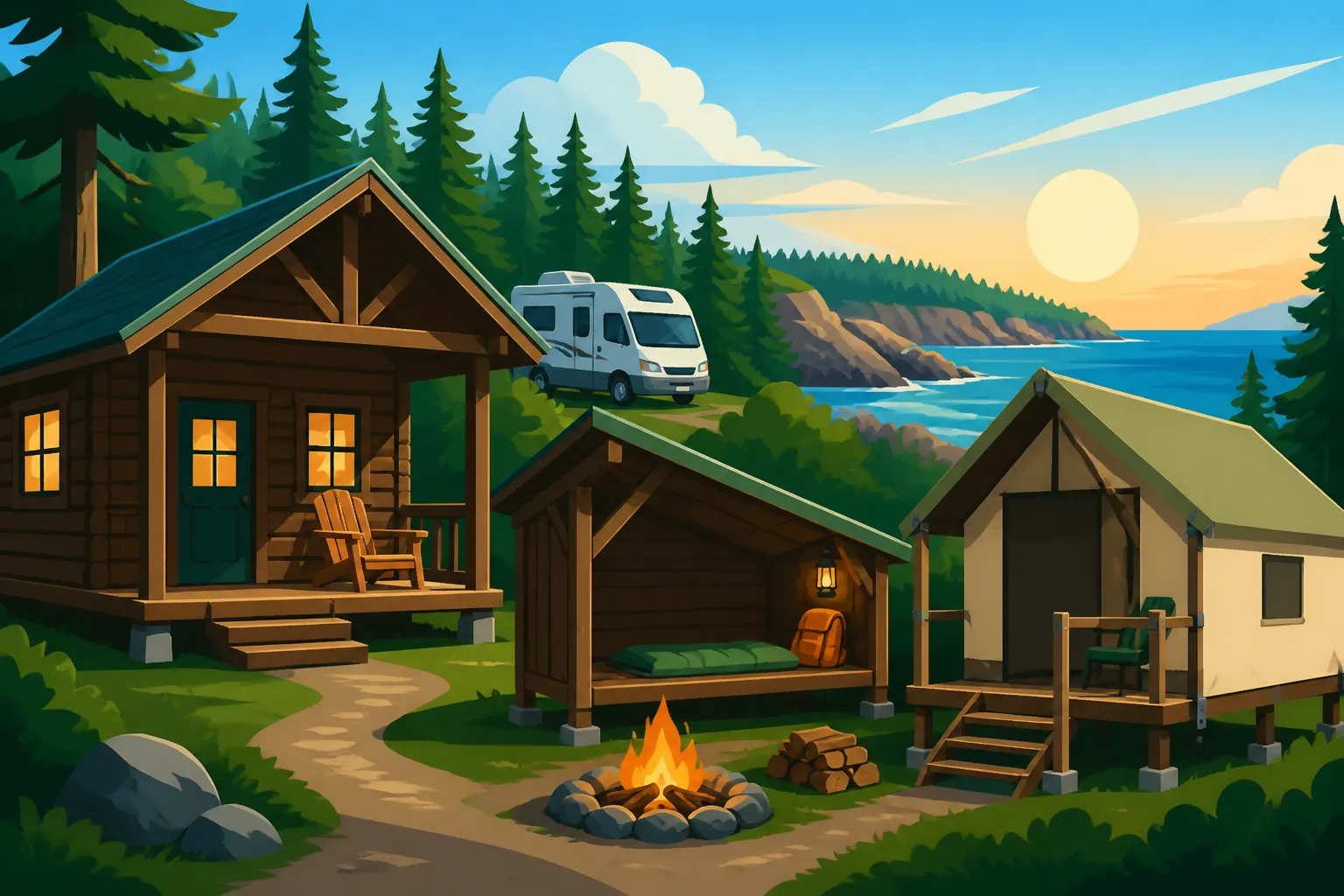
A cabin generally suggests a more enclosed building than a lean-to, while a lean-to or Adirondack shelter is often an open-sided structure. Those broad descriptions can help you picture the difference, but they are not a substitute for checking the specific site. A park may use terms differently, and the structure shown on a map may not come with the amenities you expect.
Before you choose, look for details that answer practical questions:
- Is the structure enclosed or open-sided?
- Does the listing describe sleeping space, furnishings or utilities?
- Is the site reached by vehicle, a walk from parking, or another route?
- What facilities are available nearby, and are they operating during your visit?
- Is the site offered for the dates you want?
- Are there conditions or restrictions that affect your equipment or plans?
A roof also doesn’t necessarily mean a lower-effort trip. A walk-to shelter may require carrying your gear from a parking area, and a simple roofed structure may leave you responsible for bedding, lighting, cooking equipment and weather protection. Even at an enclosed cabin, confirm what is actually included rather than planning around assumptions.
If you are comparing roofed stays with ordinary campsites, start with Cabins, Lean-Tos and Shelters: Roofed Stays in Maine State Parks—no, this is the topic itself, so instead use the park’s own site information alongside What Sites Maine State Park Campgrounds Offer and How to Choose One. That distinction matters: the type of shelter and the type of campsite are related, but they do not answer all the same questions.
A useful way to compare options is to think in terms of the trip you want:
| Option | What the label suggests | What to verify before choosing |
|---|---|---|
| Cabin | A roofed, potentially more enclosed place to stay | Whether it is heated, furnished, equipped with utilities, and available for your dates |
| Lean-to | A basic roofed shelter that may be open-sided | Whether you need to bring a tent, groundsheet, or extra wind and rain protection |
| Adirondack shelter | A named shelter type identified in a park listing or map | Its location, access route, layout and the site details attached to it |
| Tent or RV site | A campsite where your own shelter or vehicle is central to the stay | Site access, fit, services and any specific park conditions |
The table is a planning tool, not a promise about what every Maine park provides. Confirm the details for the exact site you are considering. If a map symbol or short description leaves a key question unanswered, check the official park information before committing to a particular style of trip.
Comparing Cabins, Lean-Tos and Adirondack Shelters
The best choice depends on how much protection and convenience you want, how you plan to sleep, and how much equipment you are prepared to carry. The trade-off is usually not simply comfort versus cost; access, amenities, site layout and weather exposure all affect whether a roofed stay suits your group.
Cabins: more enclosure, but check the contents
A cabin can appeal to campers who want a roof and more separation from the weather than a basic shelter offers. It may also reduce the need to pitch a tent. But the word “cabin” does not confirm that a space has beds, electricity, heat, cooking equipment or running water. Check each item individually in the official listing.
Ask yourself what you would need to bring if the cabin were only a roofed room. Would you need sleeping pads or a mattress? Your own bedding? A lantern or headlamp? A stove for meals? The answers should come from the listing, not from what cabins at other parks happen to provide.
The Megunticook Cabin is a distinct example for campers considering a roofed stay in the Camden Hills area. According to the Maine Department of Agriculture, Conservation and Forestry, the Megunticook Cabin is available year-round for reservations, with bookings accepted up to a year ahead. That availability makes checking the specific dates and current booking details especially important; it does not establish that other cabins follow the same schedule or terms.
For a cold-season visit, availability is only part of the plan. Think through access, temperature, daylight, water and restroom arrangements for the dates you are considering. Do not assume that facilities or services operate year-round simply because a cabin can be reserved year-round. The official park information is the place to confirm what applies to your stay.
The Camden Hills topic may also be useful alongside Camden Hills in Winter: Primitive Tent Sites and the Megunticook Cabin. It focuses on the cabin in a winter-planning context; for any stay, confirm the current listing and conditions rather than carrying details from another season into your plans.
Lean-tos: shelter without the same enclosure
A lean-to may offer overhead protection while leaving some sides open. That can be a good fit for campers who want a simpler roofed setup and are comfortable with a more exposed sleeping area. It can also be less suitable for someone seeking a closed room or reliable protection from wind-driven rain.
Consider how you will sleep and store gear. A sleeping bag and pad may need protection from damp ground or wind. A tarp or tent may be useful as backup depending on what the site allows and how the shelter is designed; check the park’s rules before planning to attach or set up anything. Do not assume that the roofed structure replaces all the weather protection your normal camping setup provides.
Maine Bureau of Parks and Lands describes a park’s options as Tent camping (walk-to & drive-to options); RV camping (no hookups) and 5 lean-to sites. The description illustrates why a park’s site mix can include different access and shelter styles, but it should not be treated as a statewide rule or as a description of every campground. Verify the listing for the exact park and site you are considering.
If the lean-to listing does not explain whether a tent may be used at or near the structure, don’t guess. Look for site-specific rules and contact the park through its official website if the information remains unclear. This is also a useful time to confirm what “walk-to” means for that site, because the distance and route can affect how much gear you can comfortably bring.
Adirondack shelters: use the map as well as the description
An Adirondack shelter is a specific label that can appear in a park’s campsite information. Maine Department of Agriculture, Conservation and Forestry identifies an Adirondack Shelter on a park map. A map can help you understand where a feature sits in relation to roads, trails or other campground features, but it may not show every detail that matters for your stay.
Use the map to orient yourself, then read the written site description. Look for the route from parking, the location of facilities, nearby access roads and any other details the map provides. A symbol is useful, but it cannot answer questions about the shelter’s interior, sleeping surface or included equipment unless those details are stated elsewhere.
For help interpreting campground maps and site abbreviations, see Reading a Maine State Park Campground Map Before You Pick a Site. If you are comparing a roofed site with a tent or RV site, Choosing a Maine State Park Campground by Setting, Size and Amenities can help you think through the broader campground fit.
How to Choose a Roofed Stay for Your Group
Start with the people who will use the site, not just the structure. A roofed stay that looks appealing on a map may be awkward if someone in your party has trouble walking, if you are bringing bulky bedding, or if the sleeping arrangement does not match the group’s needs. The official listing should answer capacity and access questions; where it does not, confirm before planning around the site.
Match the site to how you sleep
Write down what each person needs for a comfortable night. Some campers are happy with a sleeping pad on a simple surface, while others need a more supportive setup or protection from drafts. If a site has no stated bed or mattress, plan as though you will need to bring your own sleep system until the listing confirms otherwise.
Check whether everyone can fit the gear they need inside the structure. Even when people can sleep under a roof, there may not be room to keep all bags, footwear and wet-weather clothing under cover. A lean-to or open shelter can also leave parts of the sleeping area exposed to wind and rain. Do not count on the roof to protect every item.
Families should think about routines as well as sleeping space: where a child’s clothes will stay dry, how you will manage nighttime lighting, and what happens if someone wakes during poor weather. Groups of adults may need to consider privacy and different sleep schedules. These are practical fit questions, not assumptions about a park’s facilities.
For a first trip, compare the roofed option with a conventional campsite and decide what you want to avoid most: pitching a tent, carrying gear, sleeping in the open air, or relying on amenities you have not verified. Before Your First Maine State Park Trip: Fees, Hours, Pets and Passes can help with other planning questions beyond the shelter itself.
Weigh access against convenience
The route to a site changes how easy it is to use. A drive-to location can make it simpler to move bulky equipment, while a walk-to location may call for a lighter packing plan. The label is only a starting point: confirm where you can park, how the route is described and whether the map gives a useful picture of the terrain.
If you need to carry gear, consider consolidating it into loads that are manageable for your group. Keep frequently needed items easy to reach, and avoid packing extras just because the structure has a roof. You may still need clothing and equipment for time outdoors, and an open shelter does not replace a rain layer or a dry way to store sleeping gear.
Access is especially important for visitors with limited mobility or anyone who finds uneven ground difficult. Look for an accessible route and site information rather than assuming that a cabin or shelter is easy to reach. Accessible Visits to Maine State Parks: Sites, Privies and Maps can help you identify the details to investigate before choosing a destination.
Decide how much self-sufficiency you want
A roofed stay can still be a self-sufficient camping trip. Unless the listing clearly says otherwise, plan to bring what you need for sleeping, meals, lighting, clothing and personal care. Confirm drinking water and restroom arrangements for the particular site and dates; do not infer them from the presence of a cabin or shelter.
For RV campers, distinguish between a roofed structure and an RV site. A park may offer more than one kind of overnight option, but that does not mean the facilities are interchangeable or that a roofed site can accommodate a vehicle. Check whether the site is intended for tent camping, RV camping, or another arrangement. If you are travelling with a rig, use RV Camping at Maine State Park Campgrounds: Where Rigs Are Allowed as a broader planning reference, then confirm the exact site details.
The same care applies to power and water. A cabin label does not establish that the building has electricity or plumbing, and an RV listing does not establish that a hookup is available. Read the site description closely and plan for the services that are actually listed.
Plan Around Access, Season and Facilities
A roofed structure can make a trip feel more protected, but it does not remove the need to plan for the campground and season. Roads, water access, restrooms and other facilities may have different operating patterns. Confirm the conditions that matter for your dates instead of assuming that the park operates the same way throughout its season.
Confirm the season for the exact option
A park’s general operating season and the availability of a particular roofed stay are separate questions. A cabin may be reservable during periods when some campground facilities are limited, while a lean-to or shelter may be available only during a different window. Do not generalize from the park’s season to the site’s season.
The Megunticook Cabin is the stated example of a year-round reservation option, but that fact should not be applied to other cabins or shelters. Check each listing for the relevant dates and any notes about access, utilities or services. For broader seasonal context, see Campground Seasons Across Maine State Parks: Opening to Closing.
Check facilities as a set
Make a short list of facilities that would affect your stay. These might include drinking water, a restroom, a shower, a place to wash dishes, waste disposal or a way to charge essential equipment. Then check each item against the official information for the park and the dates you plan to visit.
Do not treat “nearby” as the same as “at the site.” A restroom or water source may be somewhere else in the campground, and the route to it may matter at night or in poor weather. If a map shows a facility, read any associated notes and confirm whether it is available during your visit.
This also applies to cooking. A roofed structure does not automatically include a stove, cooking area or permission to cook inside. Plan meals around the facilities and rules actually stated for the location. If those details are not clear, use the official park information to resolve them rather than assuming a common arrangement.
Prepare for conditions beyond the roof
A roof can help with overhead exposure, but it cannot control temperature, wind, dampness or changing weather. Bring clothing appropriate to the forecast and enough protection for the conditions you may encounter. Keep sleeping gear dry in storage that suits the access route and site type.
For an open-sided structure, wind direction and rain can make a noticeable difference to comfort. Consider how you will keep bags and clothing protected without blocking access or using equipment in a way the park does not allow. For a cabin, think about indoor temperature and what equipment is provided; do not assume that the structure is heated.
Seasonal planning also affects travel and timing. Check road and facility information before setting out, especially when visiting outside the typical warm-weather camping period. If you are planning an off-season visit, Winter in Maine State Parks: Access, Entry Fees and Camping offers related context, but the current details for the specific park and site still need confirmation.
Reservation and Site-Information Checklist
A roofed stay can be a popular choice because it reduces some setup work, but its name alone is not enough to make a sound booking decision. Gather the details for the exact site before choosing dates. If the official listing is incomplete, resolve the unanswered questions before building the trip around an assumption.
Before selecting a site
Use the official park information to check:
- The structure’s type and whether it is enclosed or open-sided.
- The dates the specific site is offered.
- The route between the site and parking.
- Whether the site is walk-to, drive-to or reached another way.
- The sleeping arrangements and what equipment, if any, is included.
- Water, restroom, shower and other facility information.
- The campsite’s intended use, such as tent camping or RV camping.
- Any rules that affect tents, cooking, equipment or site occupancy.
- Current notices that could affect access or services.
The list is deliberately broader than “does it have a roof?” A site can suit the weather preference but fail on access, sleeping arrangements or facilities. It is easier to identify that mismatch before travel than after arriving with the wrong gear.
If a park page uses a map symbol without a corresponding written description, compare the map with the site listing and look for a more detailed official description. The map may help locate an Adirondack shelter or another feature, but the listing should be checked for practical details. For general campground orientation, Park Property Guides in Maine: What the Campground Maps Show may also help.
Before packing
Pack according to confirmed features, not what you hope the site includes. A basic approach is to separate your gear into sleeping, clothing, food preparation, lighting, hygiene and emergency supplies. Then remove items that the listing confirms are already provided, if any. Do not remove essential items based on an unverified assumption.
For an open-sided shelter, make a deliberate plan for wet-weather protection and ground insulation. For a cabin, confirm the sleeping surface and bring bedding that fits the information available. For a walk-to site, check whether your bags are practical to carry and whether you can reduce the load without leaving necessary equipment behind.
Keep a copy of the relevant site details available during travel. Save or print the map and listing if that is useful for your group, especially when several people are arriving separately or need to know the route. Confirm current conditions again before departure if the park has posted an update.
On arrival
Orient yourself to the site before unpacking everything. Check that the site matches the description, identify the route to the facilities you expect to use and note any posted information. If a material detail differs from what you understood, ask park staff through the channels provided by the park rather than improvising a use that may not be allowed.
Set up sleeping gear with the structure’s actual layout in mind. Keep walkways and shared access clear, protect belongings from weather, and use the site only in ways consistent with posted rules. A roofed structure is a benefit, but it does not eliminate ordinary campground considerations such as quiet, cleanliness and respect for other visitors.
If the site’s arrangement feels different from the map, take time to re-check the listing and posted information. Maps are planning aids, and the on-site conditions are what you need to work with during the stay. Report a concern to the appropriate park contact using current details from the official website.
Common Planning Mistakes to Avoid
The most frequent mistake is treating a shelter name as a full description. “Cabin” may sound self-contained, and “lean-to” may sound simple, but neither label confirms the services, equipment or access that matter for your trip. Read beyond the title and verify each important detail.
Another mistake is assuming that a roof means full weather protection. An open structure may leave sleeping areas exposed to wind or rain from the side. A cabin may offer enclosure but not heat, electricity or bedding. Plan for the feature that is actually confirmed, not the comfort you associate with the name.
It is also easy to overlook the route. A site shown near a road on a map may still require a walk or carry, and the amount of gear you bring can make a difference. Check the access description and think about the group’s abilities before deciding that a location is convenient.
Avoid assuming that a detail from one park applies at another. Maine State Parks include different settings and site arrangements; an example from a cabin, lean-to or map should not be treated as a statewide standard. Warren Island State Park, for example, has its own mix of camping and shelter options. According to the Maine Department of Agriculture, Conservation and Forestry, Warren Island State Park offers nine wooded campsites, three group campsites, and three Adirondack shelters. That specific mix is not a template for other parks.
Finally, don’t leave facility questions until arrival. If water, restroom access, heat or electrical service would change your decision, confirm those points in advance. The same goes for reservation availability, access changes and seasonal notices. Use the current official park information for the exact stay, then make a backup plan for anything essential that is not confirmed.
Frequently Asked Questions
Does a cabin guarantee beds, heat or electricity?
No. The word “cabin” alone does not establish what is inside. Check the official listing for sleeping arrangements, furnishings, heat, electricity and other amenities, and bring what is not confirmed.
Are lean-tos and Adirondack shelters enclosed?
Not necessarily. These labels do not guarantee an enclosed room. Review the site description and map, and plan for exposure if the structure is open-sided.
Can I reserve the Megunticook Cabin throughout the year?
The cabin is described as available for reservations throughout the year, with booking information provided by the park. Check the official listing for current dates, conditions and reservation details.
Do all Maine State Parks have roofed overnight sites?
No statewide assumption is safe. Parks differ in their site offerings. Check the specific park’s official information to see whether it lists a cabin, lean-to or shelter.
Sources
- Maine Department of Agriculture, Conservation and Forestry, Bureau of Parks and Lands — CamdenHillsGuide.pdf?pubDate=20250808 (checked November 23, 2026)
- Maine Department of Agriculture, Conservation and Forestry — Camden Hills Guide (PDF) (checked November 23, 2026)
- Maine Bureau of Parks and Lands (checked November 23, 2026)
Disclaimer
This article is for general informational purposes only and does not constitute professional advice. Laws, prices and regulations vary by location and change over time. Consult a qualified professional for guidance on your specific situation. Maine Camping & RV is not a government agency and is not affiliated with any government agency.